



























HOW FILIPINO FOOD STAYS WITH US
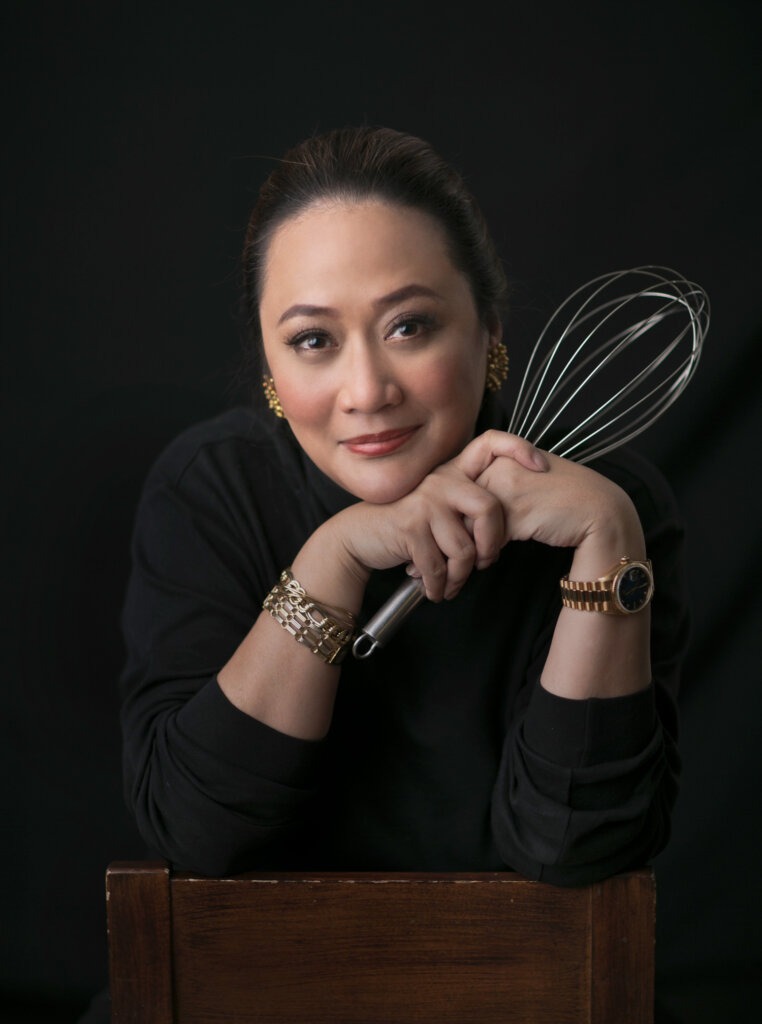
For Chef Reggie Aspiras, preserving Filipino food begins from knowing where it comes from.

She has never seen Filipino food as something to be catalogued or kept behind glass. It belongs where it always has—in family kitchens, around crowded tables, at neighborhood gatherings, and in the routines that naturally hold everyday life together. Over the years, she has returned to the same belief: If you want to understand Filipinos, pay attention to the meals they prepare, the tables they gather around, and the memories those meals carry. “I believe that people of this generation should know our roots, where we come from, who we are, through what we eat,” Aspiras observes.
She says it plainly, without trying to make it sound profounds. To her, food is more than a reflection of culture. It is one of the places where culture naturally takes shape.
The belief comes to life through the Philippine Heritage Kitchen, the platform she founded to celebrate regional cooking and the stories built around it. Rather than searching for a single definition of Filipino cuisine, it embraces the country’s many culinary traditions. Every province contributes something different. Every family cooks in its own way. Together, they tell a story far richer that any single dish or recipe ever could.
She learned that lesson long before food became her profession.
Growing up, her family’s kitchen was where people naturally gathered. Pots simmered on the stove while relatives wandered in and out. Lunch stretched into merienda, and visitors rarely left without eating. Whether it was a birthday, an ordinary weekend, or an unexpected visit, life somehow found its way back to the table. Nobody announced that food mattered. It simply did.
One familiar question has stayed with her through the years … “Kumain ka na ba?”
Most Filipinos hear it almost every day. For Aspiras, it has never been just another greeting, On the surface, it asks whether someone has eaten. More often, it is another way of asking how that person is doing. It offers concern without making a fuss. Sometimes a simple meal says what conversation cannot.
Another idea she often returns to is ginhawa. She describes it as more than comfort. It is the feeling that settles in after eating something familiar, something that eases both body and spirit. Those lesson never came from recipes or classrooms. They grew out of everyday life—one shared meal after another.
Even when her father served as Secretary of Tourism, the family’s dining table remained the easiest place to welcome visitors, Guests from overseas often found themselves sharing a meal before any formal discussions began.
“Food always made people comfortable. It allowed people to talk, to settle things, to laugh,” she reminisces.
Years later, she found herself seeing much the same thing while working with embassies and international organizations. Many foreign guests arrived with only a passing knowledge of Filipino cuisine. They often left surprised by its depth after tasting dishes rooted in different regions, prepared with local ingredients, and shaped by family traditions. Rather than trying to persuade them, Aspiras simply allowed the food to speak for itself.
Her work has taken her through publishing, television, teaching, restaurant kitchens, and food consulting, yet she has never spoken as though she built that career on her own. Every recipe, she believes, reflects the work of those who came before it—from home cooks and farmers to market vendors and elders who kept traditions alive simply by practicing them. She has remained a willing student throughout her career, convince that everyone she meets has something to teach her.
That openness has allowed her to more comfortably between classical culinary training and lessons learned in Filipino homes. She sees no reason to place one above the other.
The same outlook shapes the way she teaches. Passing on knowledge matters more to her than asserting authority. Every new interpretation of Filipino cuisine, she believes, should acknowledge the traditions that came before it.
The same philosophy guides the advice she gives restaurants. Rather than urging them to follow a single formula, she encourages them to understand the story behind every dish. Place matters. Memory matters. Knowing why a recipe exists is often just as important as knowing how to prepare it.
Adobo is a good example … “Adobo is collective. It is ours.”
Every household has its own version. Some are darker, some lighter. Some lean toward vinegar, others towards soy. None of that troubles her. Those differences are proof that Filipino food has always belonged to the people who cook it.

Her work has also reached beyond restaurants and television. After Typhoon Yolanda, she joined volunteer kitchens preparing meals for displaced families. Under those circumstances, food was no longer about presentation or technique. It offered comfort and restored a sense of routine, reminding people they had not been forgotten.
Whether developing products or documenting regional recipes, the principle remains the same. Food makes the most sense when it stays connected to the people and places that shaped it.
She also challenges the notion that Filipino cuisine is defined only by rich or heavy dishes. To her, the country’s culinary identity is far more varied, shaped by regional traditions, the ingredients available in different places, and generations of cooks who have kept those traditions alive.
For Aspiras, preserving Filipino food begins with knowing where it comes from. Once that connection is kept alive, recipes can continue to evolve without losing the character that made them worth passing on. Families will adapt them in their own kitchens, and younger cooks will leave their mark in time. That is simply how Filipino food continues from one generation to the next. wf Cesar Cruz Jr.