

























Chefs don’t always have to be in the kitchen and teachers don’t always have to be in a classroom.
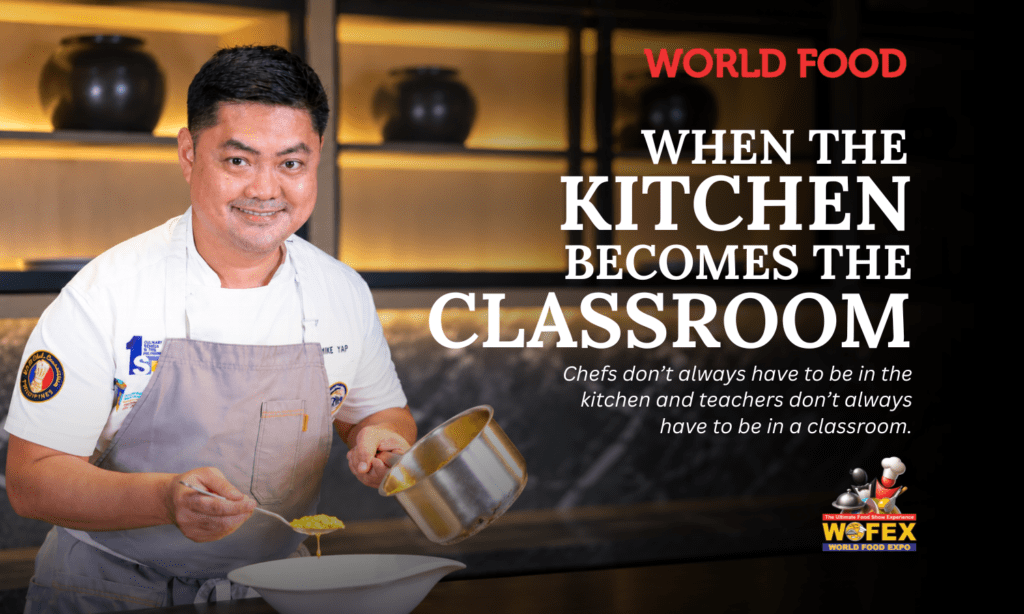
Mike Yap did not set out to become a chef educator.
At one point, he was preparing to migrate to the U.S. and viewed teaching as little more than a temporary stop along the way. The plan was simple: Keep busy while waiting for his immigration process to move forward, then leave.
That plan never materialized.
“I remember telling my first boss, honestly, this is a temporary thing for me. I’ll probably stay one, one and a half years. And then, as fate would have it, that plan of going to the U.S. did not push through – and I discovered that I had a knack for teaching.”
What began as a placeholder eventually became a profession. Years later, Yap remains in academia, drawing on experience from professional kitchens in the Philippines and abroad while helping train future chefs. The transition did not lessen the excitement that first attracted him to the culinary world. It simply changed where he found it.
Professional kitchens thrive on urgency. Every service demands focus and execution under pressure. Teaching, he discovered, carried a different kind of energy. “As I transitioned to teaching, I found that you also get that same adrenaline rush when you have a classroom or kitchen full of aspiring chefs eager to learn. And that somehow translates to my personal experiences to share, as well.”
For Yap, the classroom became another place where skills, habits, and hard-earned knowledge could be put to use. Some of those lessons came the hard way. Before attending culinary school in the U.S., he completed an apprenticeship at Tagaytay Highlands. During that period, he mishandled a cleaver and cut his left middle finger. The scar remains visible today. He has never repeated the mistake.
Over the years, Yap has coached numerous students in competitions, but one experience from 2011 remains especially memorable.
He was preparing a student for the Hong Kong International Culinary Classic. This involved weeks of research and development and practice sessions. Then, during one of the final rehearsals, everything seemed to unravel. Components were overlooked, seasoning was inconsistent, and the performance fell far below expectations. With only one practice session remaining before the competition, Yap’s frustration boiled over.
There was little reason to expect what followed.
On competition day, the same student delivered his strongest performance and earned the highest gold medal in his category against competitors from around the world. For Yap, it remains a reminder not to judge a competitor by a single practice run.
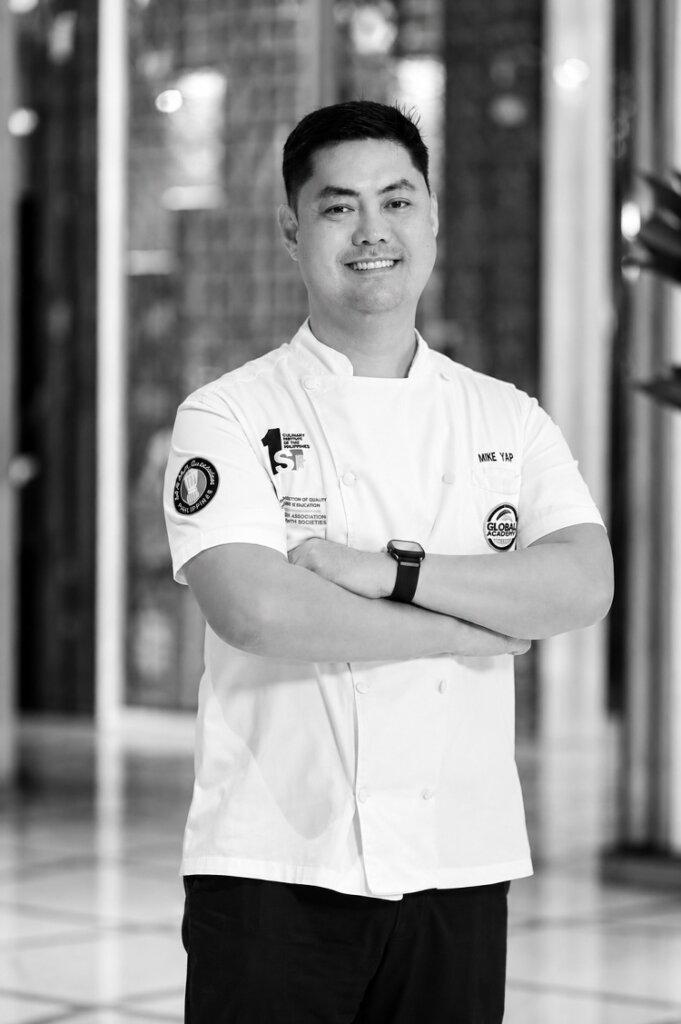
The experience also reflects one of the realities of teaching. Students do not always progress in a straight line, and coaches do not always know when a lesson has finally taken hold.
One misconception he regularly addresses is the assumption that culinary school graduation automatically turns someone into a chef. Whenever he speaks to graduating students, he reminds them that professional titles are not awarded by ceremony alone. In the culinary industry, experience remains the ultimate credential—a practicality that often also inspires when students begin questioning their own abilities
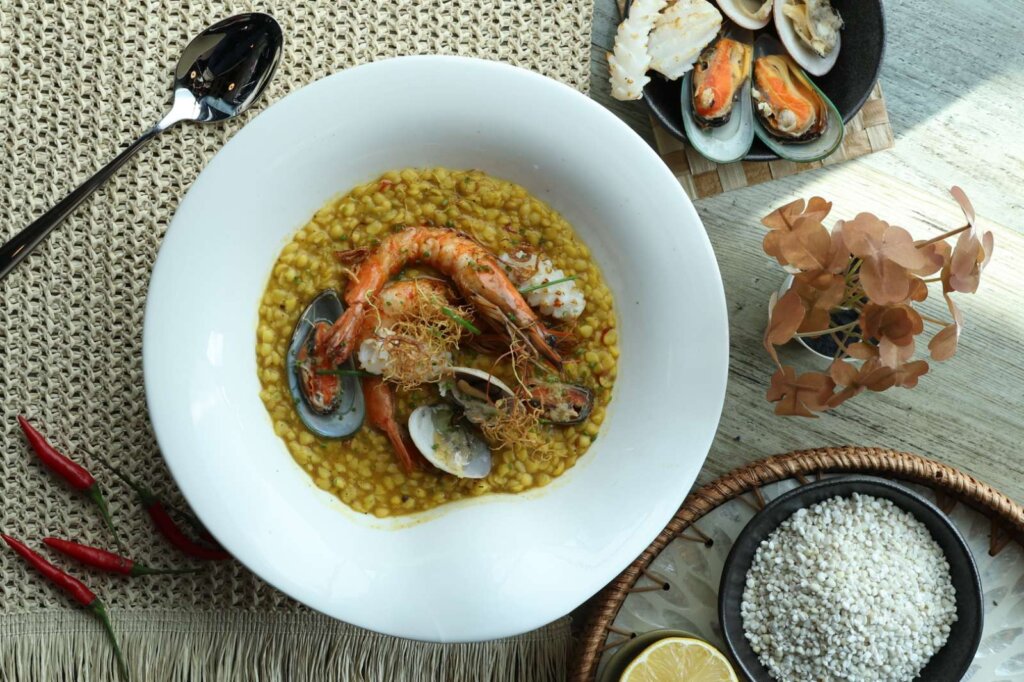
“That’s why you’re here to learn. There is no shortcut or fast track to learning. It’s all baby steps. If you aim to improve even by just a centimeter every day, look back after 365 days and you’ll realize you’re much better that you were then.” Improvement in his view, comes through repetition. That is why he spends more time discussing techniques than recipes. While food trends change and menus change, techniques remain.
Rather than encouraging students to follow recipes, Yap encourages them to understand the methods behind them. The ability to sauté properly, for example, applies whether someone is preparing Filipino, French, Chinese, or Japanese food.
Competition coaching has also reinforced another lesson. One of the hardest parts of training students is resisting the urge to step in and solve problems personally. The objective is not to demonstrate what he can do. The objective is to prepare students to perform on their own when it matters. That approach extends beyond competitions and into the classroom itself.
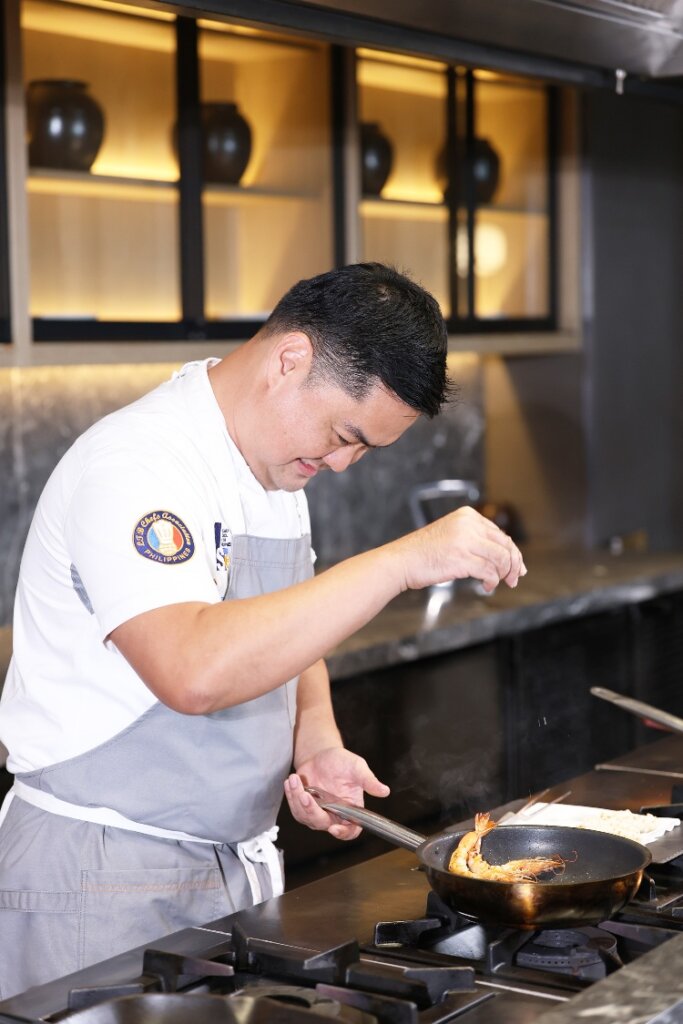
Throughout the years, students have introduced him to family recipes, unfamiliar techniques, and questions that send him back to do the research. He readily admits that he does not always have immediate answers. When that happens, he investigates and returns to the discussion later.
“I learn as much from them. Sometimes somebody shares a family recipe or a technique, and that is learning as well. Even a question thrown by a student is an opportunity to learn.”
Yet, the students change every term. The questions are rarely the same, and many of those questions still send him searching for answers after class.
Years after entering academia, Yap still finds himself doing work he never saw as part of his future. He teaches technique, discipline, and the realities of professional kitchen life to aspiring chefs preparing for careers of their own. Years after taking what he thought would be a temporary job, Yap remains in the classroom, teaching what once came from kitchens he only expected to pass through. wf Cesar Cruz Jr.