


























He is tasked to shape the new generation of culinary professionals and he is meeting the challenge head-on.
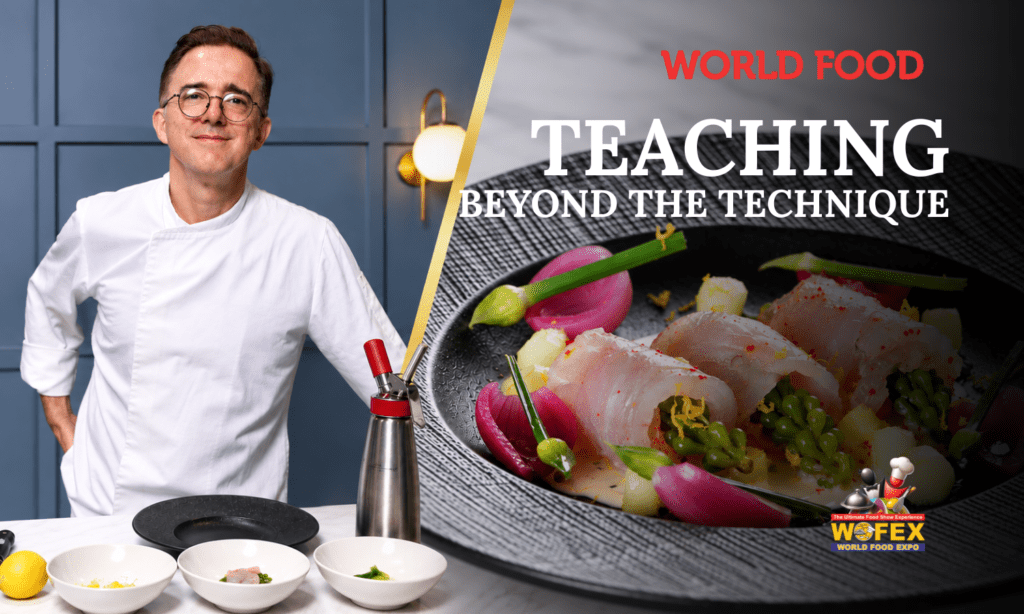
For Chef Marc Chalopin, culinary education begins before students ever pick up a knife. It starts the moment they step into a kitchen they are still learning to read—how they pause at the entrance, how they process instructions delivered in quick succession, how they react when nothing feels familiar yet. Technique comes later.
As executive chef of École Ducasse Manila at Enderun Colleges, he leads faculty training, curriculum direction, and alignment with culinary standards shaped by the philosophy of Alain Ducasse. His background spans decades in Michelin-starred kitchens in Paris, though in teaching, it rarely takes center stage.
His approach is shaped less by background than by method: how students are introduced to repetition, corrected without interruption, and observed until movement holds under pressure.
A principle from Ducasse often frames his thinking, “The older I get, the more I think I know nothing.”
In practice, it keeps students from leaning on certainty too early. Even basic tasks are treated as something still being rehearsed, not something already mastered. That mindset carries into how he speaks to students in the kitchen. “Do not be frozen in your mind, be open.”
Before any cooking begins, students must spend time observing. They stand at the edge of the kitchen and watch how stations operate, how orders move, how space tightens during service. Entry into actual production is delayed. Awareness of structure comes first.
The early phases are repetitive by design. The same movements are repeated until hesitation disappears—when memory takes over. Chalopin watches for small inconsistencies-someone rushing a step, skipping sequence, or breaking timing under pressure. These are corrected, through repetition, not extended explanation.
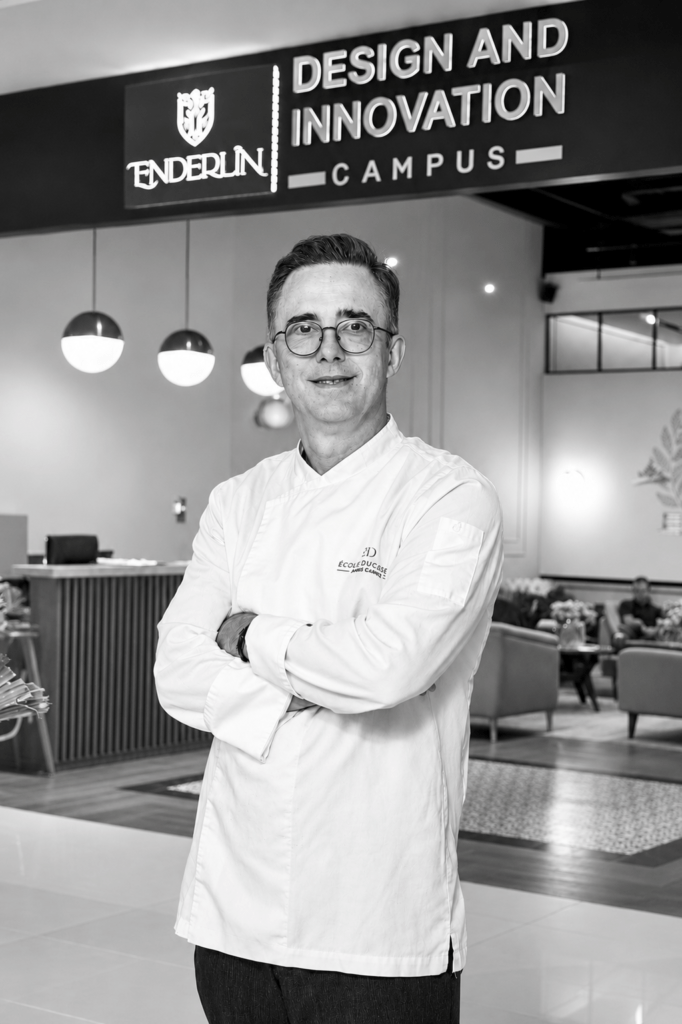
Some lessons are deliberately withheld. “If I showed you that at the beginning, you wouldn’t understand,” the master likes to reiterate.
Inside the classroom kitchen, instruction stays minimal. Focus remains on proportion, timing, and placement rather than decoration or excess detail. Plating is reviewed first as structure, then as compositions. Students are trained to see balance before execution.
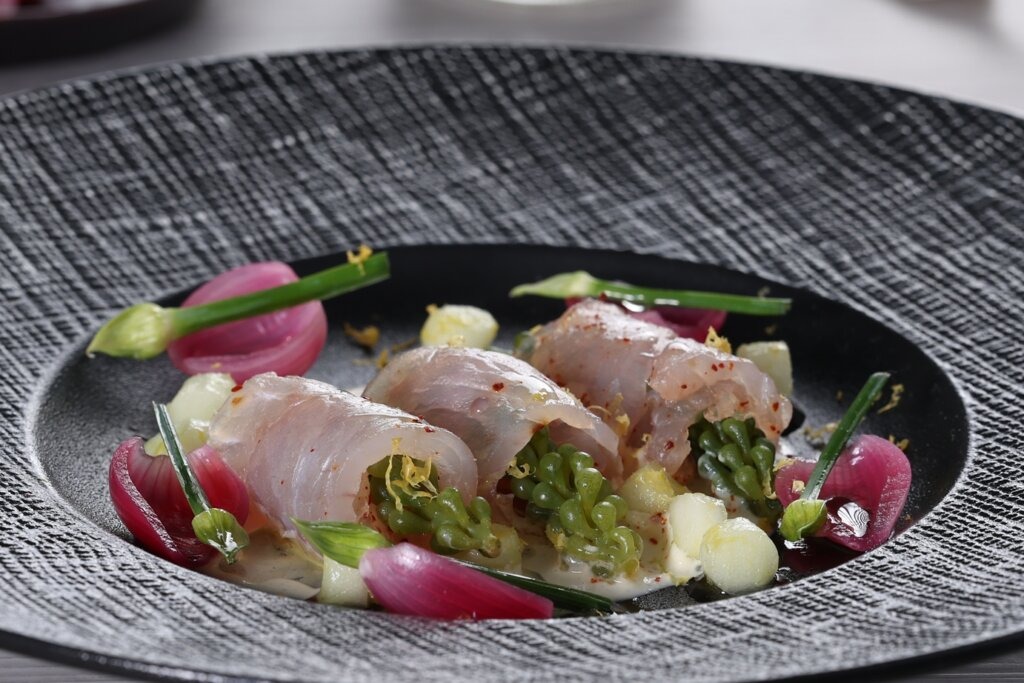
Even withing this structure, he is direct about what cannot be rushed, claiming, “The difficult part is to make a tasty plate. Taste and emotions are difficult.”
Chalopin teaches that technique can be broken into steps. Taste, on the other hand, develops differently. It comes from repetition, correction, and exposure to service operations where timing and judgment cannot be rehearsed.
Students today arrive at culinary school with a strong familiarity shaped by constant exposure to global cuisine online. Recognition often precedes practice. He does not resist this, but changes the starting point of training.
French culinary foundations remain the focal point at École Ducasse Manila. While students must also work with what is available in Philippine markets—adjusting technique to variations in quality and availability—some ingredients are non-negotiable and must be imported. However, ingredients do change daily, and students must be able to adapt.
Over time, some students move into kitchens abroad, others stay in local restaurants, a few return to teach. Chalopin does not measure progress through titles or positions. He looks instead at whether habits remain once instruction is no longer present.
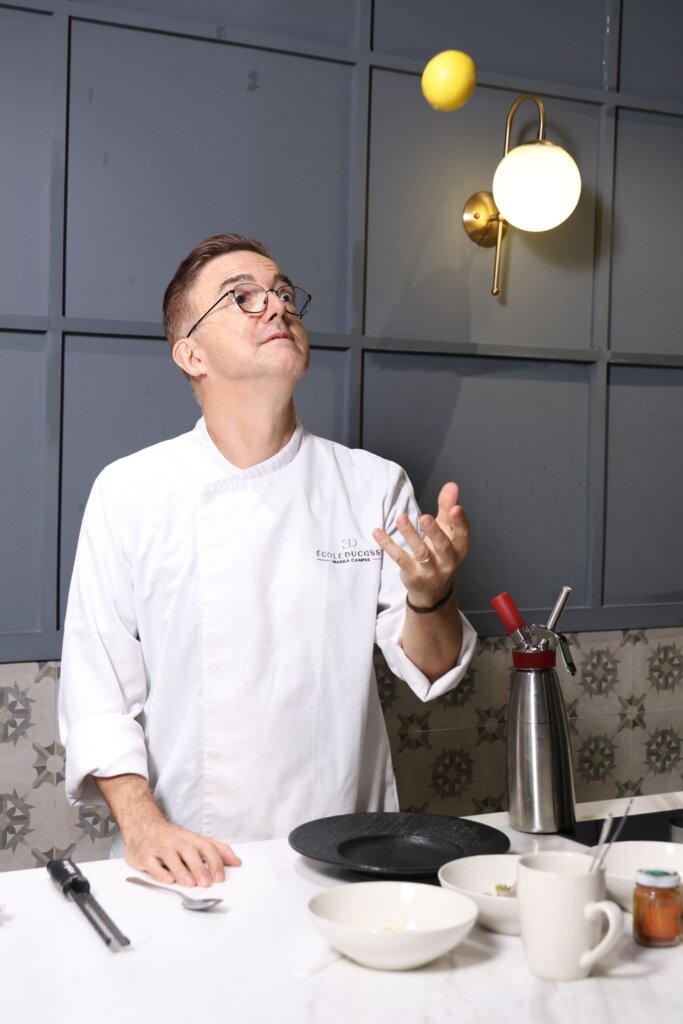
He also extends training beyond the school through programs with Tuloy Foundation and the Don Bosco community, offering professional culinary instruction to students who could not otherwise enter professional kitchens. Some of these students later moved on to established restaurants.
Even after years of teaching, Chalopin’s method remains unchanged: observe closely, correct when necessary, and let repetition do most of the work.
In the kitchens, he moves between stations without interruption, checking details as service unfolds, instruction is brief and practical, delivered in passing rather than explained at length, then absorbed through—once again—repetition.
Service ends without ceremony. Stations are cleared and tools put away. The kitchen settles, waiting for the next class. wf Cesar Cruz Jr.