


























A first-hand journey through heritage ingredients, terroir-driven drinks, and the people keeping Slow Food moving.
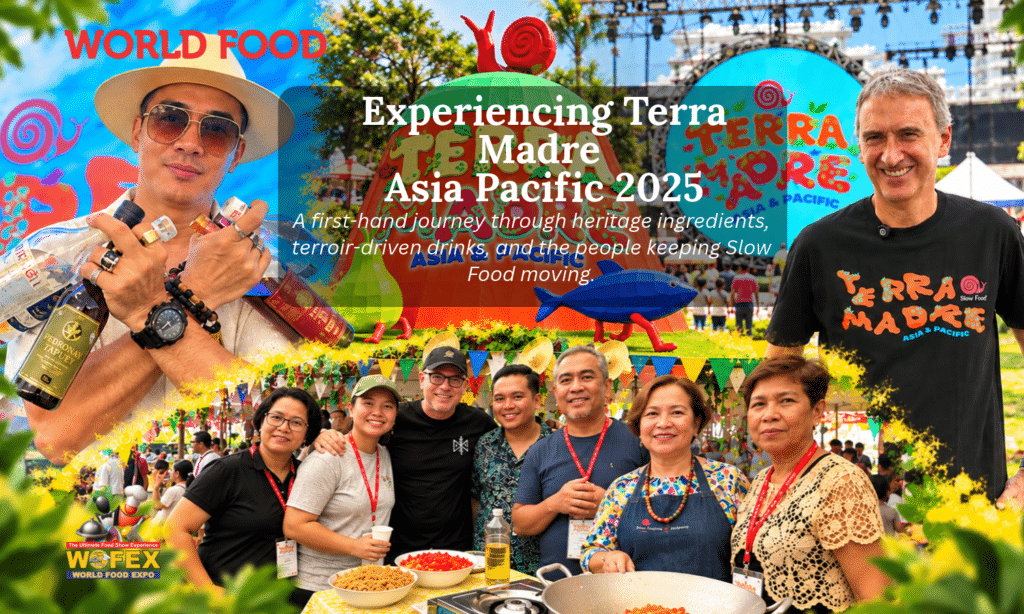
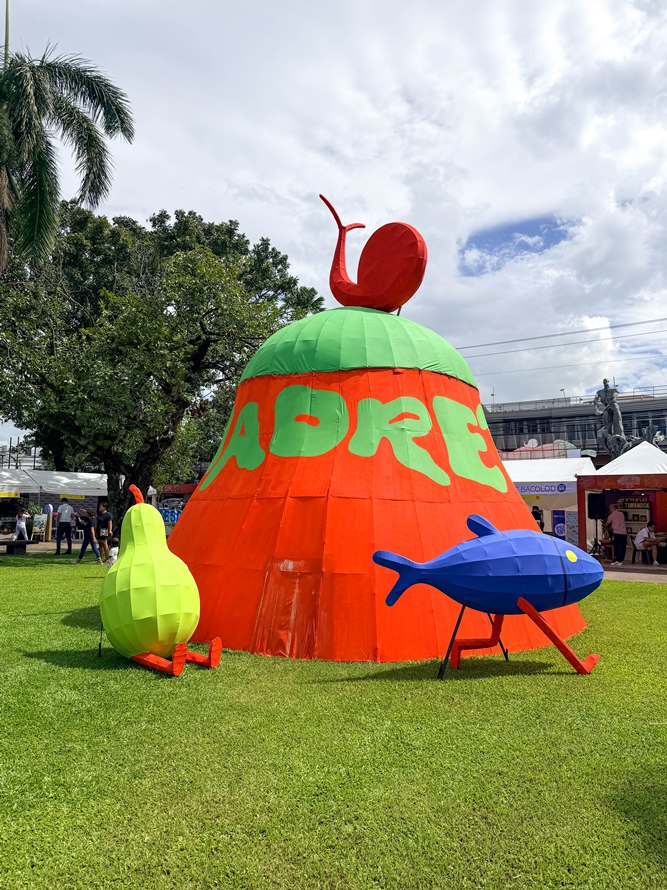
In a fast-moving world, Terra Madre Asia & Pacific (TMAP) in Bacolod posed a simple question: What happens when we slow down long enough to take responsibility for what we serve?
Held from November 19 to 23 at the Provincial Capitol Lagoon, the event carried the theme “From Soil to Sea: A Slow Food Journey Through Tastes & Traditions,” highlighting the connection between land, water, culture, and culinary heritage.
Being there, surrounded by passionate practitioners, made the philosophy tangible. Heirloom rice from upland farms sat alongside native cacao transformed into tablea. Ark of Taste ingredients such as batuan, kadyos, artisanal muscovado sugar, tultul from Guimaras, and asin tibuok from Bohol were showcased, each a testament to local knowledge and care. Rice wines, fruit ferments, and heritage coffee illustrated terroir—how soil, climate, and culture shape flavor. Tasting these products made it clear that flavor and sustainability are inseparable.
TMAP had so much to offer – from public talks and conferences, taste workshops and cooking demos to exhibits, hands-on learning, and slow drinks. The Street Food was packed with curious and hungry visitors while the Organic Farmers’ Festival beckoned with its wide array of produce.
Faces of the Movement
Behind Slow Food are the people who make it real. The event was brought to life by Slow Food International, the City Government of Bacolod (Mayor Greg Gasataya), the Provincial Government of Negros Occidental (Governor Bong Lacson), and key partners including the Department of Tourism, Department of Agriculture, Department of Trade and Industry, and The Technical Education and Skills Development Authority (TESDA). Local leadership from the Slow Food Community in Negros, led by Reena Gamboa and Chin Chin Uy , ensured the event reflected culture, knowledge, and sustainable practices.
We caught the public talk on “Slow Food Travel,” with Slow Food International’s Paoli di Croce, DOT VI Regional Director Crisanta Rodriguez and Helen Javier Arguelles, the Tourism Officer of Sagay City.
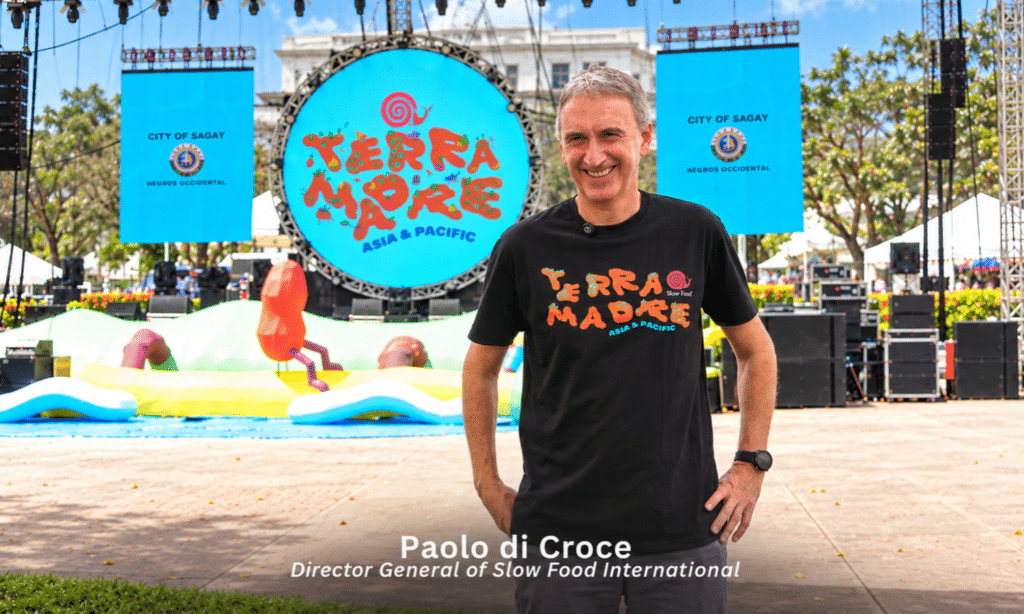
The discussion focused on rethinking how tourism engages with local communities. Rather than operating from a position of hierarchy, the speakers emphasized working with communities as co-equals. When communities are placed at the center of tourism planning and management, development becomes more sustainable and inclusive. This approach also shapes the relationship between hosts and visitors, grounded in kapwa—a shared ethic of respect, care, and mutual responsibility.
Exchange was identified as a core principle of slow food travel. Every destination has something to learn and something to offer, like Negros Occidental can draw lessons from other regions and vice versa. Field visits—whether within the country or across borders—help foster exchanges and build networks that strengthen, rather than isolate, local communities.
Food travel is not elitist and its true value lies in meaningful interaction. While communities benefit economically, tourists often gain deeper insight into local food systems, culture, and ways of life.
Respect, the panelists stressed, must be reflected in fair compensation. When tourism ensures that value flows directly to communities, slow food travel becomes an expression of equity rather than exclusivity. With cooks and producers at the center—sharing their food and knowledge—slow food travel is defined not by luxury, but by intention.
The discussion ultimately linked slow food travel to the broader challenge of reforming a global food system shaped by inequality and misinformation, underscoring the need for education, awareness, and continued dialogue.
A visit to the Slow Drinks tent had us learning about Australian bushtucker teas under the guidance of Dale Tilbrook. We sampled tisanes made from different varieties of myrtle – lemon, cinnamon, and anise – all soothing, refreshing, and laden with medicinal and health benefits.
We met local advocates who had much to share. Chef Gel Salonga Datu of Slow Food Laguna describes her group as “young, but deeply rooted.” Founded in 2025, it brings together organic farmers, weavers, and cheesemakers from Santa Cruz, home of kesong puti—handmade from carabao milk, without machines, a living culinary tradition. The group helped pass a municipal resolution recognizing the cheese as cultural heritage. “We don’t just promote,” she says. “We work with the LGU so these communities can prosper.”
Cookbook author and restaurateur Angelo Comsti arrived in Bacolod guided by curiosity. “This is where all the chefs are—the farmers, the producers,” he said. His research on sukang sasa, vinegar made from nipa palm fruit, began while documenting local traditions for his cookbook Also Filipino. At Terra Madre, his tastings provoke surprise, recognition, and concern. “It’s a dying art,” he said simply.
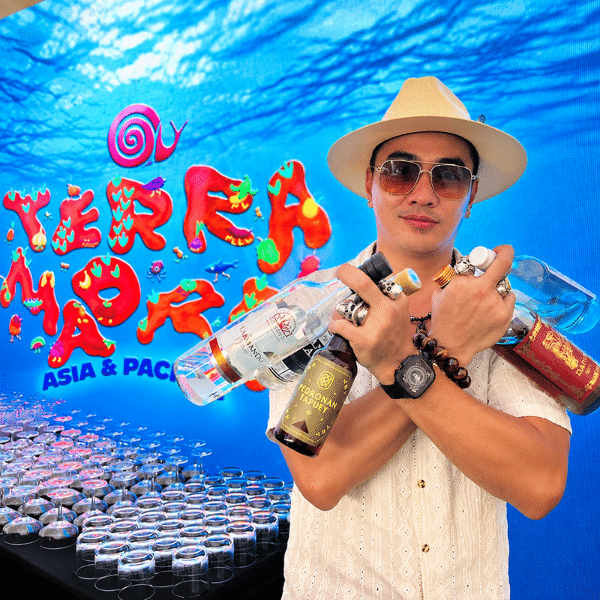
Kalel Demetrio, CEO of Alab Distillery and a founder of Slow Drinks Philippines, joined Slow Food through its ingredients-first philosophy. Where early Terra Madre events focused mostly on food, he introduced cocktail hours, tastings, and full Slow Drinks showcases. In Bacolod, indigenous spirits like lambanog were treated not as novelties but as cultural expressions deserving care and attention.
A Feast for the Senses
Over 2,000 delegates from over 20 countries attended. Chefs showcased terroir-driven menus, while Slow Drinks leaders demonstrated how beverages express place as vividly as any dish. One highlight was a demonstration of bir pletok, a traditional spiced non-alcoholic brew from Jakarta. As the ginger, lemongrass, pandan leaves, and spices combined, a warm aroma filled the pavilion. While sipping, I could almost taste the history and culture.
The Street Food was a hive of activity – there was so much food to enjoy. It was ‘hunger satisfied’ after feasting on grilled meats, fresh seafood, all types of skewers, and wonderful native dishes. Two styles of champorado caught our eye and palate. One was basic – too basic, in fact, as it does not even need cocoa or chocolate. Made from organically grown Unoy champorado blend from Kalinga, the grains impart a natural rich taste and color when cooked into a porridge. The other was a more upscale version called Heirloom Rice “Champorado,”
made with Balatinao sticky rice from Banaue and topped with macapuno, coconut milk, coconut ice cream, and banana slices. Still another rice-inspired dish worth mentioning is the mango ice cream topped with tapol rice from Antique – a cool and refreshing take on suman at mangga.
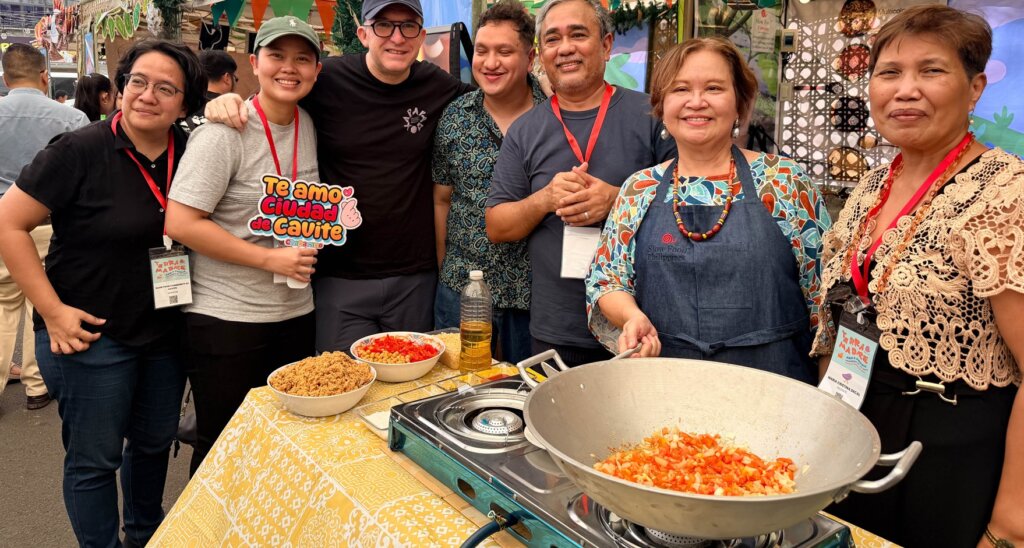
The Capitol Lagoon, framed by international fast-food chains, hosted conversations about food systems that resist standardization and excess. Being in that space drove home the stakes of the Slow Food mission.
TMAP made one truth clear: Slow Food is not anti-industry—it is pro-future. From the flavors I tasted to the people I met, I left with a renewed sense of responsibility: to act with intention, accountability, and respect for the next generation—one ingredient, one menu, one decision at a time. wf Cesar Cruz Jr.
*The article was originally published in the Philippine Gastronomy issue of World Food magazine in February 2026.